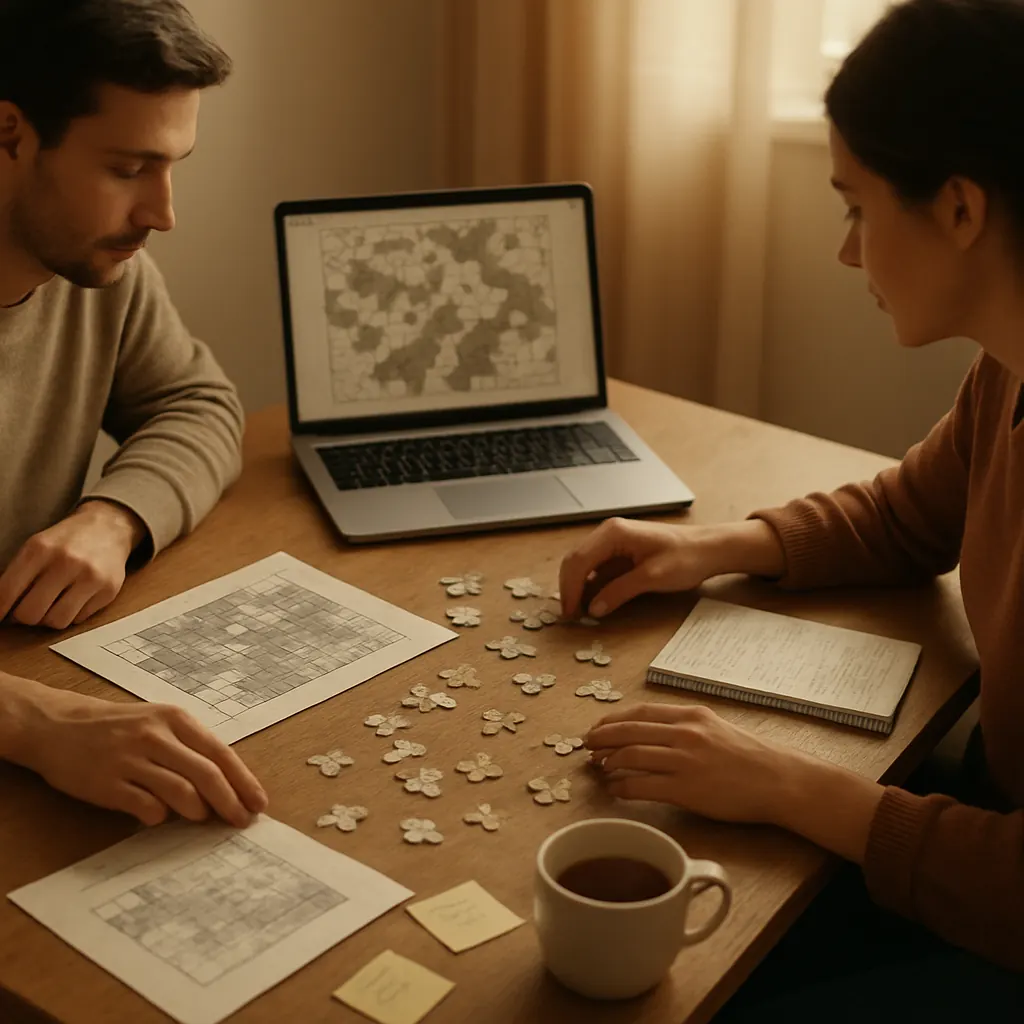
Why join a puzzle community?
Puzzle groups and small competitions can be a gentle way to deepen your skills, meet people who enjoy the same calm challenge, and add variety to a solo routine. But the social side can feel intimidating: leaderboards, spoilers, and fast-paced contests sometimes push a competitive tone that not everyone wants. This guide lays out practical, low-stress ways to participate, whether you prefer slow, friendly play or occasional timed events.
Finding friendly groups and events
Look for communities that emphasize learning and inclusion over ranking. Good places to check:
- Small Discord servers or Slack workspaces focused on casual play.
- Local meetups or library game nights with a relaxed atmosphere.
- Forums and subreddit communities with clear codes of conduct.
- Asynchronous platforms (daily puzzle threads, email rounds) that let you join on your own time.
When you’re evaluating a group, watch for simple signals: polite moderation, pinned rules about spoilers, and people who post walkthroughs or explanations instead of only boasting about fast solves.
How to participate without pressure
Joining in comfortably often comes down to controlling how and how much you participate:
- Start as a spectator. Read chat logs or past threads to get a sense of tone before posting.
- Set your own goals. Decide whether you care about placement or just the practice. Focus on one personal metric (accuracy, trying a new strategy, or learning a new puzzle type) rather than others’ scores.
- Use asynchronous options. If live events feel stressful, pick groups that offer daily or weekly puzzles you can solve on your schedule.
- Take breaks and mute when needed. It’s fine to step back from an event if it’s making you anxious; most communities welcome returnees.
Friendly etiquette for sharing and discussing solutions
Sharing solutions and strategies is the best part of community participation — when it’s done considerately. A few practical rules keep things friendly:
- Mark spoilers clearly. Use spoiler tags, hidden blocks, or a clear “SPOILERS AHEAD” header before any step-by-step solution.
- Ask before giving hints. Offer graded nudges rather than full reveals: a small hint for stuck players, a fuller explanation on request.
- Share what you learned, not just the answer. Explain a memorable shift in thinking or a pattern you noticed so readers can reproduce the insight.
- Credit sources and collaborators. If you used a puzzle creator’s variant or adapted a technique, mention it.
- Use a growth mindset language. Focus on “I tried X and it helped” instead of “You should do X.” This reduces pressure and keeps feedback optional.
If you want to show how your approach changes over weeks, consider keeping a private or public log and sharing selective entries with mentors or fellow players; a simple habit is to use a puzzle journal to record what you tried and what clicked.
Low-pressure competition formats that work well
Not every contest needs leaderboards and strict timing. Here are formats that keep pressure low while still offering the thrill of shared solving:
- Casual rounds: Short sets (3–5 puzzles) with relaxed time limits and a post-round discussion. Score only if you want to track progress.
- Buddy tournaments: Pair players of similar experience so the focus is cooperative rather than strictly competitive.
- Practice heats: Run an unranked practice session before any official timed round so members can warm up together.
- Asynchronous ladders: Players submit times within a 24–72 hour window; this removes live pressure and allows for thoughtful solves.
- Theme nights: Events centered on one puzzle type (logic grids, kata-style, or word puzzles) where everyone explores the same patterns together.
Simple rules to keep tournaments friendly
- Clear spoiler policy and fixed delay before posting full solutions.
- Optional anonymity for results to reduce social comparison.
- Encourage a short reflection post from each player: one thing learned, one question.
- Separate competitive and social channels—one for scores and another for chat and hints.
Using communities to learn, not to compare
Communities can accelerate learning if you treat them as classrooms, not scoreboard displays. Practical ways to keep the focus on growth:
- Pick a small skill to practice each month (deductive elimination, pattern spotting, or speed on a subset of puzzles) and ask for targeted feedback.
- Ask for worked examples. Request that a solver explain the crucial step rather than just the full solution; this highlights technique over outcome.
- Celebrate different goals. Some members seek relaxation, others fast solves. A healthy community recognizes both.
Looking for games suited to casual group play? Try my game recommendations to try with others — they tend to scale well for small groups or daily shared solves. If you prefer word puzzles, communities often play cooperative word rounds; see a few word-game alternatives that are friendlier for group play.
Hosting your own low-stress event
If you want to start something small, here’s a simple checklist:
- Choose a short puzzle set (3–6 items) with mixed difficulty.
- Set expectations: time window, spoiler rules, and tone (casual, learn-focused).
- Offer a quick demo round or sample solution so newcomers know how discussion works.
- Close with a 10–15 minute debrief where people share one technique they found useful.
Keeping events brief and predictable removes many sources of stress and makes it easier for people to attend regularly.
Final notes: boundaries, kindness, and curiosity
Communities are strongest when members respect boundaries and model curiosity. If something feels competitive in a way you don’t enjoy, speak with a moderator or look for unranked options. Be generous with hints, modest about answers, and curious about how others think — those habits tend to make puzzle spaces calmer and more welcoming.
Joining the puzzle scene doesn’t require a trophy case. With clear etiquette, thoughtful formats, and a focus on learning, you can enjoy community puzzles and competitions at a pace that suits you.