Tag: beginner

  • Solving Nonograms (Picross) — Step-by-Step Strategy for Beginners

    Solving Nonograms (Picross) — Step-by-Step Strategy for Beginners

    What a nonogram is — quick refresher

    Nonograms (also called Picross or Griddlers) are logic puzzles where each row and column has number clues that describe runs of filled cells. Your goal is to fill cells so every clue matches the blocks of filled squares in that line, with at least one empty cell separating blocks. A small set of simple rules plus consistent methods make these puzzles approachable and calm to solve.

    Tools and marks to use

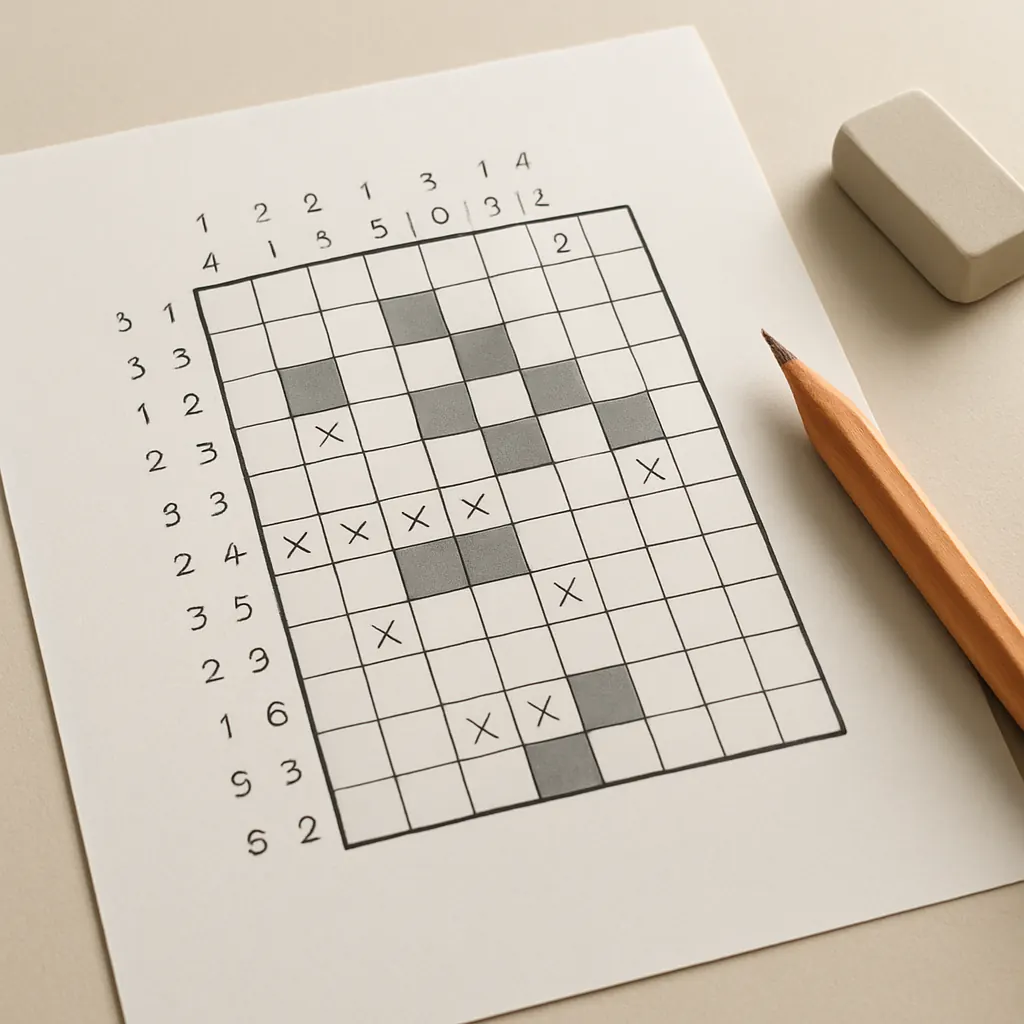
    • Filled mark — a solid square or shaded cell to show a definite fill.
    • Empty mark — an X or light dot for cells you know must be blank.
    • Number tracking — cross off a clue when you’ve satisfied that run so you know what remains.

    Step-by-step solving method

    Think of nonogram solving as repeating a small set of reliable steps until the grid is complete. Move calmly and check each row and column as new information appears.

    1. Step 1 — Fill immediate certainties

      Look for rows or columns with a single clue equal to the entire length (e.g., “5” in a 5-cell row) or a clue of zero. Fill every cell when the clue fills the entire line, and mark all cells empty when a clue is zero.

    2. Step 2 — Use overlaps (the classic first move)

      When a run is longer than half the line, there are guaranteed overlapping cells. For example, in a 10-cell line with a clue of 7, the run can start as early as cell 1 and as late as cell 4. The overlap (cells 4–7) are therefore guaranteed filled. Mark those, then mark empties at the extremes where a run cannot reach.

    3. Step 3 — Cross-intersect rows and columns

      After filling or marking empties in one direction, check intersecting lines. A filled cell in a row reduces possibilities in its column and vice versa. Use this intersection repeatedly — it’s the engine of most solutions.

    4. Step 4 — Place forced gaps

      Once part of a run is located, you often know that the cell next to it must be empty, because runs require separation. Place an X immediately after a confirmed block when necessary to prevent runs from merging incorrectly.

    5. Step 5 — Use small-clue deductions

      Short clues like 1 or 2 can create predictable patterns: isolated clues of 1 often go between empties, and a separated pair like “2, 1” in a tight space can force placement. Think locally and test whether a tentative placement creates a contradiction in the intersecting line.

    6. Step 6 — Iterate and re-evaluate

      After each change, re-scan the grid. New fills and empties often unlock further definite moves. Avoid guesses; prefer deductions that follow directly from the clues and marks.

    Short example — a 5×5 walkthrough

    Suppose a 5×5 puzzle has a top row clue of “3” and the grid is empty. A run of 3 in 5 cells can be positioned starting at cell 1, 2, or 3. The guaranteed overlap is cells 2–4, so shade them. Now check the corresponding columns — those filled cells reduce possibilities elsewhere and may create new overlaps.

    As you mark empties next to that run and cross-check column clues, you’ll often force other rows to place their runs in single locations. Keep alternating directions until the puzzle resolves.

    Common patterns and where they appear

    • Edge fills — clues that reach the grid edge often push the run to one side, creating predictable empties and overlaps.
    • Single-cell separators — occasionally a 1-clue sits between two larger clues; that central 1 will be isolated by empties on both sides.
    • Symmetric constraints — many puzzles use symmetry visually, but don’t rely on it. Let the clues force placements.

    If you want a short list of recurring visual patterns to recognize and speed up solving, read about general pattern-recognition techniques that apply across puzzle styles.

    Typical beginner mistakes

    • Guessing too early — avoid marking a cell filled unless you can deduce it logically. One wrong fill can mislead the whole grid.
    • Forgetting to cross off satisfied clues — leaving lines unmarked makes it harder to see what remains; cross off runs as you complete them.
    • Not updating both directions — every change in a row should prompt a column check and vice versa.
    • Misplaced separators — placing an empty where a separating empty is not guaranteed can break future deductions.

    Progressive exercises to build confidence

    1. Start with 5×5 or 10×10 puzzles that have many zeros and full-line clues to practice overlaps and edge fills.
    2. Move to mixed-clue puzzles where you must alternate rows and columns repeatedly; focus on cross-intersections rather than sweeping fills.
    3. Try medium-sized puzzles with several small runs (1s and 2s) to practice placing isolated blocks and forced gaps.
    4. Challenge yourself with larger 15×15 puzzles that demand patience and a disciplined marking habit.

    When you practice, keep a record of errors and the type of deduction that fixed them. That habit turns mistakes into learning — try using a puzzle journal template to log patterns, missteps, and timing.

    Cross-training: other deduction patterns

    Nonogram logic overlaps with other pencil-and-paper puzzles. If you enjoy systematic elimination and inference, you may find value in reading about complementary techniques such as logic grid puzzle deduction patterns. The approach to consistent marking and chaining deductions is similar and strengthens your general puzzle intuition.

    Final tips

    • Work steadily and review rows and columns after every change.
    • Use light marks for uncertain notes if you must hypothesize, but aim to convert them to definite marks quickly or erase them.
    • Keep solving sessions short and calm—nonograms reward steady, focused work rather than frantic guessing.

    With these steps, a few simple patterns, and steady practice, you’ll find most beginner nonograms become predictable and enjoyable. Pace your practice with progressive exercises and track your progress in a journal to see clear improvement over time.
  • Beginner’s Guide to Logic Games: Types, Skills, and Where to Start

    Beginner’s Guide to Logic Games: Types, Skills, and Where to Start

    Logic games are puzzles that ask you to use reasoning, observation, and pattern recognition to arrive at a solution. They come in many shapes — from grid-based deduction puzzles to picture-based nonograms and word-focused logic — but they share one quality: they reward patient, methodical thinking. This guide explains the main types of logic games beginners encounter, the cognitive skills they exercise, and simple next steps for choosing your first puzzles.

    What counts as a logic game?

    At a high level, a logic game gives you a set of constraints and asks you to find a configuration that satisfies them. That might mean assigning names to seats in a logic-grid puzzle, shading cells to make a picture in a nonogram, or ordering numbers in a sequence puzzle. Many popular brain games combine logic with pattern work and a touch of creativity.

    Common puzzle subtypes

    Logic-grid puzzles

    These are the classic “who sat where?” puzzles. You’re given facts and contradictions and use a grid to mark possibilities (yes/no). They emphasize deduction and careful bookkeeping. A typical beginner grid is small — three to five categories with a handful of clues — and teaches you to mark inferences that follow from combined clues.

    Nonograms (Picross, Griddlers)

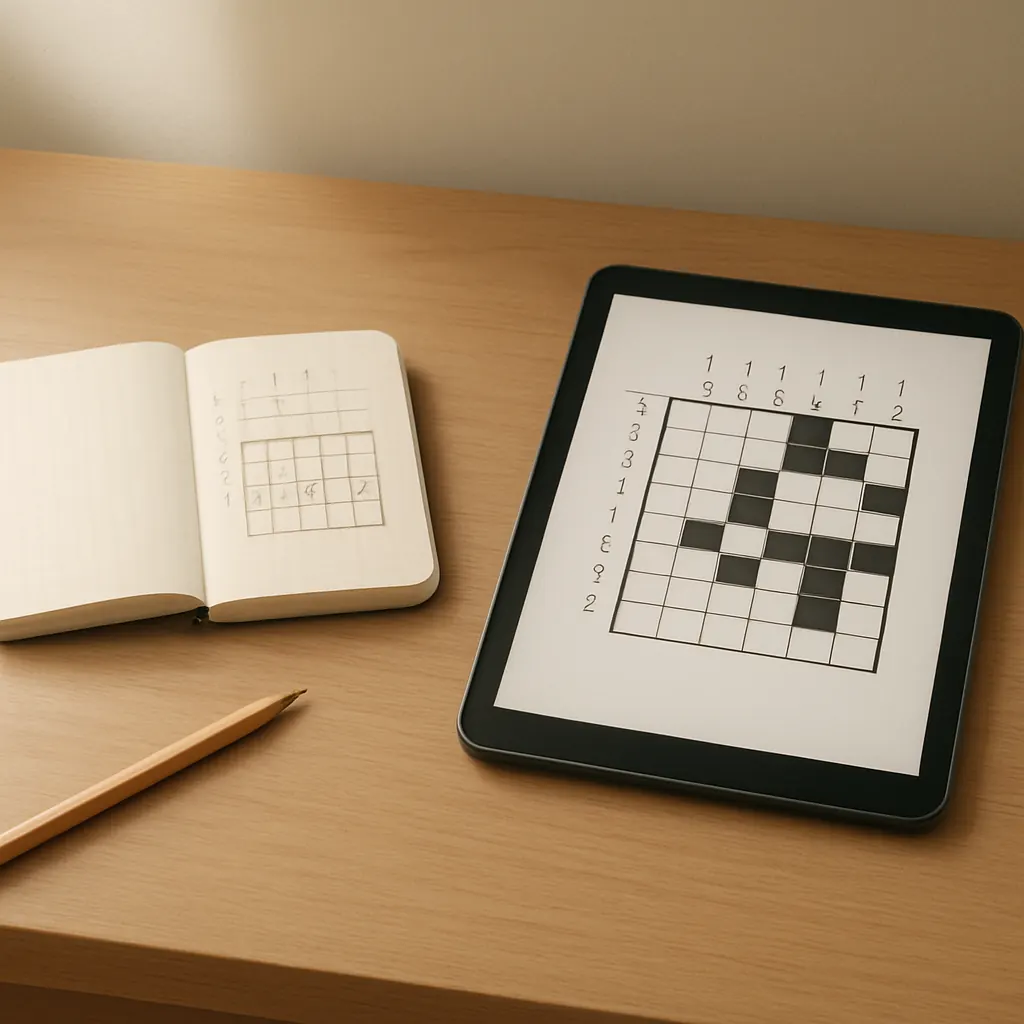
    Nonograms provide number clues at the edge of a grid that indicate how many consecutive cells to shade. Solving them creates a simple picture. They blend deduction with visual pattern recognition and are especially friendly for players who like steady progress and satisfying reveals.

    Sequence and logic-sequence puzzles

    These puzzles ask you to find a missing item in a sequence or order elements according to relational clues (e.g., earlier/later, higher/lower). They strengthen logical ordering and sometimes arithmetic reasoning when sequences follow numeric patterns.

    Word logic puzzles

    Crossword-like challenges, word ladders, and word-based deduction puzzles rely on vocabulary and connections between words. They’re a good fit if you enjoy language and want puzzles that mix verbal creativity with logic.

    Pure logic puzzles (Sudoku-style)

    Sudoku and its relatives use numeric or symbol constraints in a regular grid. They train systematic elimination and scanning techniques. Many variants tilt harder or introduce new rules, but basic Sudoku is a classic starter for logical elimination practice.

    Thinking skills logic games build

    • Deduction: Drawing certain conclusions from given facts. This is the backbone of logic-grid puzzles.
    • Pattern recognition: Spotting recurring arrangements or progressions. Useful across nonograms, sequences, and Sudoku.
    • Working memory: Holding intermediate facts in mind while you test possibilities.
    • Systematic search: Learning to rule options in or out methodically rather than guessing.
    • Spatial reasoning: Interpreting grid layouts and visual relationships, especially in picture puzzles.

    If you want to try a few practical techniques right away, start with simple scanning and marking habits: mark definite truths, mark definite exclusions, and then look for cells or slots constrained by those marks. For more practiceable methods that cross puzzle types, see basic pattern-recognition techniques.

    How to choose your first puzzles

    Begin by picking a subtype that fits your temperament and time. If you like slow, visual satisfaction, start with nonograms. If you prefer verbal play and light logic, try word logic puzzles. If you enjoy tidy deduction and taking notes, logic-grid puzzles are a clear match. For a gentle introduction and curated choices, check the list in calm logic and word game recommendations.

    Consider these practical factors:

    • Length: Do you want 5–10 minute bites or longer sessions? Daily mini-puzzles are easier to adopt as a habit than multi-hour brainteasers.
    • Interface: Paper, app, or browser? Some people prefer physical pencils and notebooks; others like apps that check deductions automatically.
    • Accessibility: Look for adjustable sizes, color options, and clear fonts if visual clarity matters.

    If you need help deciding between apps, books, or browser sites, see the short guide on how to pick puzzle books and apps — it walks through trade-offs and budget-friendly options.

    First-session checklist: a calm way to start

    1. Choose one puzzle type to try for a week rather than switching every day.
    2. Set a small time goal (10–20 minutes) so the puzzle feels approachable.
    3. Make a pen/pencil or a digital note handy to record deductions. Writing helps make reasoning visible.
    4. After finishing, note one strategy that worked and one recurring difficulty to revisit later.

    When you’re ready to turn these short sessions into a steady practice habit, the post on building a daily puzzle habit has simple, calm routines that beginners find sustainable.

    Next steps and gentle goals

    Begin with small, consistent wins. Set goals like “complete three beginner nonograms this week” or “solve one short logic-grid puzzle after lunch.” As your confidence grows, try slightly larger puzzles or explore a new subtype to cross-train skills (for example, sequence puzzles help sharpen ordering skills useful in logic grids).

    If you enjoy collecting resources, aim to assemble a short personal toolkit: one favorite app or website, one pocket puzzle book, and a short list of solving techniques to practice. For guidance on picking those resources, consult how to pick puzzle books and apps.

    Final tips

    • Keep sessions calm and low-pressure; puzzles are most rewarding when they’re enjoyable rather than performance-driven.
    • Use pencil-and-paper for early practice — physical notation helps many beginners internalize deduction patterns.
    • Work on pattern recognition deliberately: pause after a solve to notice the recurring shapes or clue structures you used. See basic pattern-recognition techniques for short exercises.
    • Try a few recommendations from the curated list in calm logic and word game recommendations to find the style you enjoy most.

    Logic games reward small, steady improvements. Pick a subtype that matches your tastes, practice simple techniques, and let curiosity guide you to the next challenge. If you stick with short, calm sessions, you’ll build useful solving habits without turning play into stress.