Logic games are puzzles that ask you to use reasoning, observation, and pattern recognition to arrive at a solution. They come in many shapes — from grid-based deduction puzzles to picture-based nonograms and word-focused logic — but they share one quality: they reward patient, methodical thinking. This guide explains the main types of logic games beginners encounter, the cognitive skills they exercise, and simple next steps for choosing your first puzzles.
What counts as a logic game?
At a high level, a logic game gives you a set of constraints and asks you to find a configuration that satisfies them. That might mean assigning names to seats in a logic-grid puzzle, shading cells to make a picture in a nonogram, or ordering numbers in a sequence puzzle. Many popular brain games combine logic with pattern work and a touch of creativity.
Common puzzle subtypes
Logic-grid puzzles
These are the classic “who sat where?” puzzles. You’re given facts and contradictions and use a grid to mark possibilities (yes/no). They emphasize deduction and careful bookkeeping. A typical beginner grid is small — three to five categories with a handful of clues — and teaches you to mark inferences that follow from combined clues.
Nonograms (Picross, Griddlers)
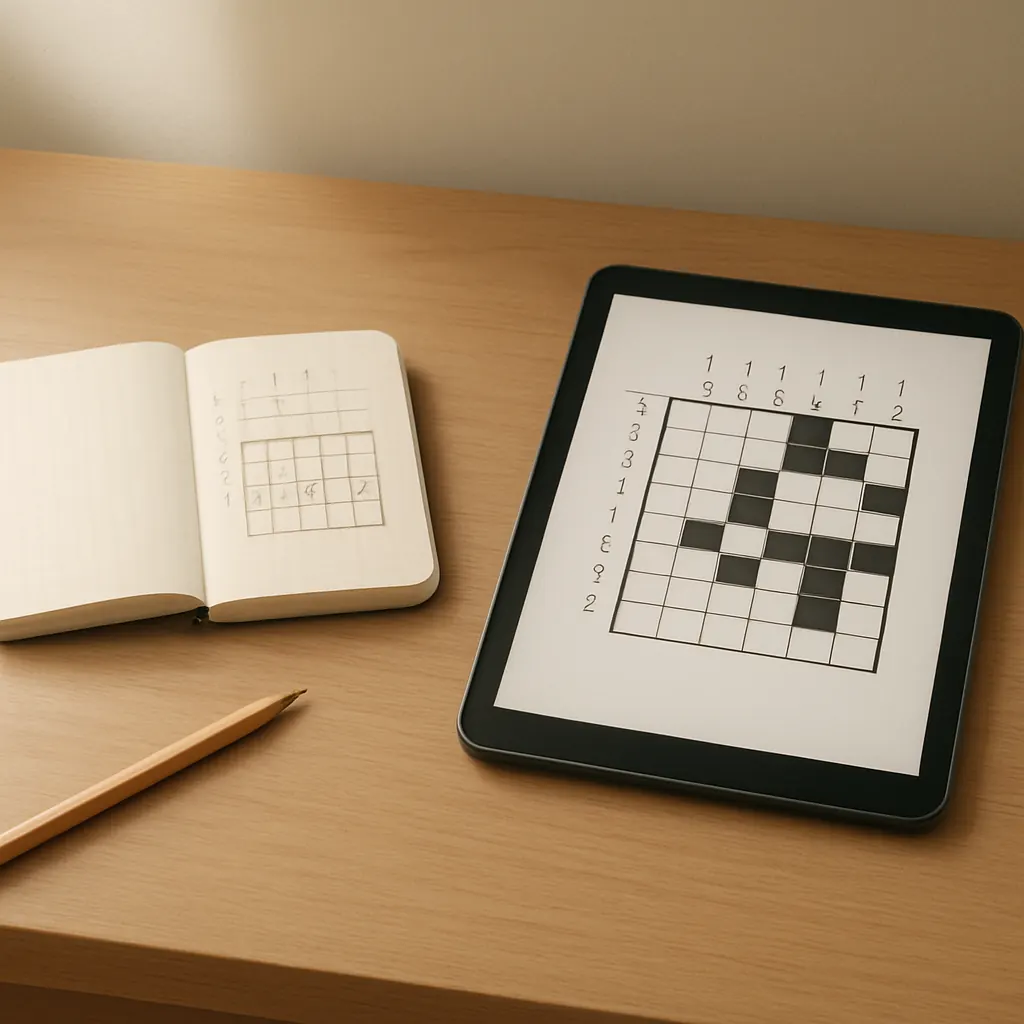
Nonograms provide number clues at the edge of a grid that indicate how many consecutive cells to shade. Solving them creates a simple picture. They blend deduction with visual pattern recognition and are especially friendly for players who like steady progress and satisfying reveals.
Sequence and logic-sequence puzzles
These puzzles ask you to find a missing item in a sequence or order elements according to relational clues (e.g., earlier/later, higher/lower). They strengthen logical ordering and sometimes arithmetic reasoning when sequences follow numeric patterns.
Word logic puzzles
Crossword-like challenges, word ladders, and word-based deduction puzzles rely on vocabulary and connections between words. They’re a good fit if you enjoy language and want puzzles that mix verbal creativity with logic.
Pure logic puzzles (Sudoku-style)
Sudoku and its relatives use numeric or symbol constraints in a regular grid. They train systematic elimination and scanning techniques. Many variants tilt harder or introduce new rules, but basic Sudoku is a classic starter for logical elimination practice.
Thinking skills logic games build
- Deduction: Drawing certain conclusions from given facts. This is the backbone of logic-grid puzzles.
- Pattern recognition: Spotting recurring arrangements or progressions. Useful across nonograms, sequences, and Sudoku.
- Working memory: Holding intermediate facts in mind while you test possibilities.
- Systematic search: Learning to rule options in or out methodically rather than guessing.
- Spatial reasoning: Interpreting grid layouts and visual relationships, especially in picture puzzles.
If you want to try a few practical techniques right away, start with simple scanning and marking habits: mark definite truths, mark definite exclusions, and then look for cells or slots constrained by those marks. For more practiceable methods that cross puzzle types, see basic pattern-recognition techniques.
How to choose your first puzzles
Begin by picking a subtype that fits your temperament and time. If you like slow, visual satisfaction, start with nonograms. If you prefer verbal play and light logic, try word logic puzzles. If you enjoy tidy deduction and taking notes, logic-grid puzzles are a clear match. For a gentle introduction and curated choices, check the list in calm logic and word game recommendations.
Consider these practical factors:
- Length: Do you want 5–10 minute bites or longer sessions? Daily mini-puzzles are easier to adopt as a habit than multi-hour brainteasers.
- Interface: Paper, app, or browser? Some people prefer physical pencils and notebooks; others like apps that check deductions automatically.
- Accessibility: Look for adjustable sizes, color options, and clear fonts if visual clarity matters.
If you need help deciding between apps, books, or browser sites, see the short guide on how to pick puzzle books and apps — it walks through trade-offs and budget-friendly options.
First-session checklist: a calm way to start
- Choose one puzzle type to try for a week rather than switching every day.
- Set a small time goal (10–20 minutes) so the puzzle feels approachable.
- Make a pen/pencil or a digital note handy to record deductions. Writing helps make reasoning visible.
- After finishing, note one strategy that worked and one recurring difficulty to revisit later.
When you’re ready to turn these short sessions into a steady practice habit, the post on building a daily puzzle habit has simple, calm routines that beginners find sustainable.
Next steps and gentle goals
Begin with small, consistent wins. Set goals like “complete three beginner nonograms this week” or “solve one short logic-grid puzzle after lunch.” As your confidence grows, try slightly larger puzzles or explore a new subtype to cross-train skills (for example, sequence puzzles help sharpen ordering skills useful in logic grids).
If you enjoy collecting resources, aim to assemble a short personal toolkit: one favorite app or website, one pocket puzzle book, and a short list of solving techniques to practice. For guidance on picking those resources, consult how to pick puzzle books and apps.
Final tips
- Keep sessions calm and low-pressure; puzzles are most rewarding when they’re enjoyable rather than performance-driven.
- Use pencil-and-paper for early practice — physical notation helps many beginners internalize deduction patterns.
- Work on pattern recognition deliberately: pause after a solve to notice the recurring shapes or clue structures you used. See basic pattern-recognition techniques for short exercises.
- Try a few recommendations from the curated list in calm logic and word game recommendations to find the style you enjoy most.
Logic games reward small, steady improvements. Pick a subtype that matches your tastes, practice simple techniques, and let curiosity guide you to the next challenge. If you stick with short, calm sessions, you’ll build useful solving habits without turning play into stress.