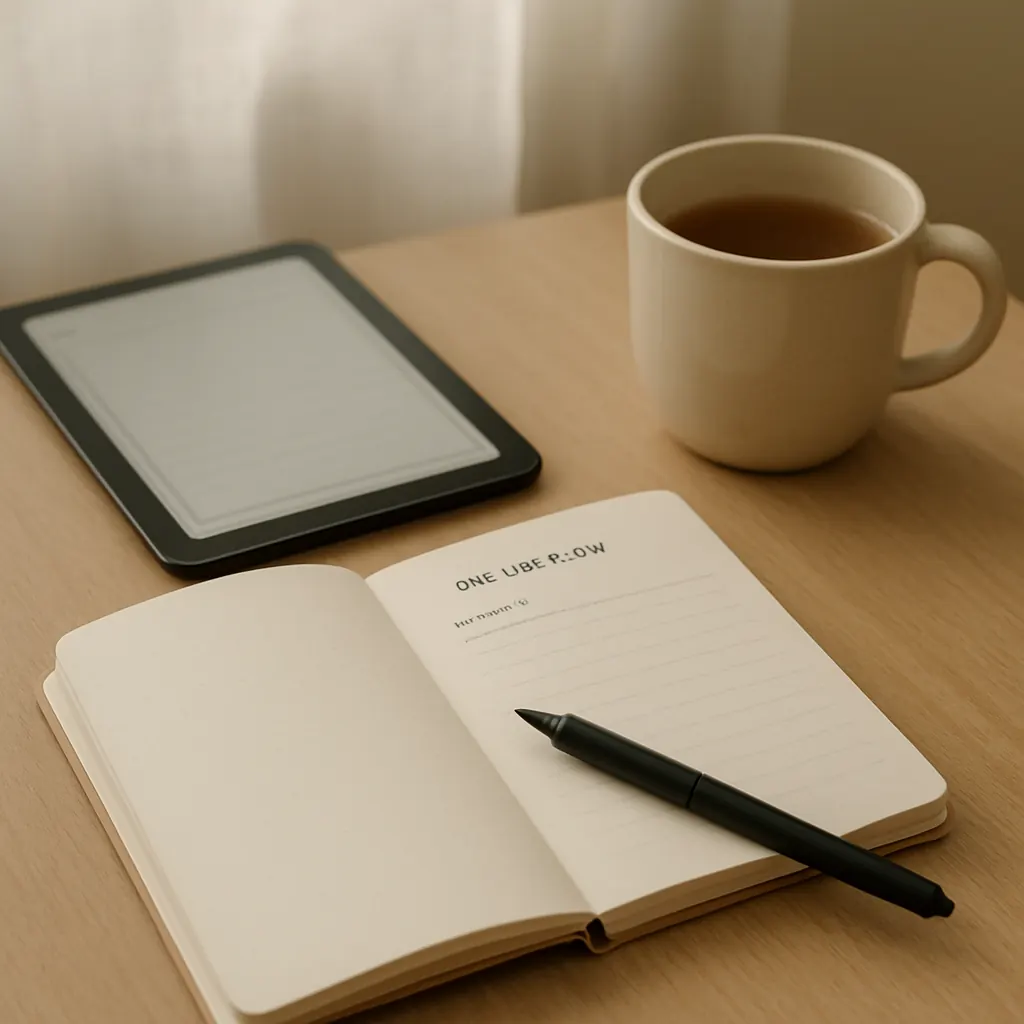
Keeping a puzzle journal doesn’t need to be another long task on your to-do list. The goal of a minimalist journal is to preserve the benefits of reflection—tracking progress, spotting patterns, and reinforcing insights—without outweighing the pleasure of solving. This guide gives a one-page, five-line daily template you can use in a notebook or a notes app, examples to copy, and short review routines to make the journal meaningful.
Why keep a tiny puzzle journal?
A compact journal preserves the habit of reflection. When you capture one clear insight and a single metric each day, you build a data set that reveals trends (faster solves, recurring mistakes, preferred puzzle types) without needing long entries. It helps you make small, guided adjustments to your routine and gives you a low-friction way to remember techniques that worked.
The 5-line daily template (one line = one short sentence)
Each day, record five short items. Aim for one line each so the whole entry fits on a single row or a single note. Use abbreviations as needed.
- Time — how long you spent (e.g., 15m, 45m).
- Puzzle type — name or category (Crossword, Logic Grid, Nonogram, Daily Sudoku, Word Ladder).
- One insight — a single sentence: technique tried, mistake to avoid, or a small realization (e.g., “scan for singleton rows first”).
- One metric — a chosen difficulty or efficiency measure (see note below on which scale to use).
- Mood tag — one word that captures how it felt: calm, focused, frustrated, playful.
Example line: 20m • Mini-Sudoku • Mark pencil candidates earlier • D4 • calm
How to fill each line quickly
- Time: use shorthand (m for minutes, h for hours). If you do several short puzzles, sum them or list as 3x10m.
- Puzzle type: a 2–3 word label that you’ll recognize later.
- One insight: force yourself to write only one sentence—this creates clarity and makes retrieval easy.
- Metric: pick one simple scale and stick to it for trend analysis. For guidance on scales, see note puzzle difficulty.
- Mood tag: keep a small list of tags (calm, focused, stuck, flow, amused) so entries are fast to choose.
Two quick templates you can copy
Printable (one row):
DATE | TIME | TYPE | INSIGHT | METRIC | MOOD
Digital (single-line note):
2026-06-01 — 25m • Crossword • flag theme words first • D3 • focused
If you use a simple note app, pin the monthly page and add a new line each day. If you use a notebook, reserve one page per month for quick scanning at the end of the period.
Four short examples (realistic short entries)
- 2026-03-05 — 15m • Wordle x2 • try vowel-first guesses • D2 • playful
- 2026-03-06 — 40m • Logic Grid • mark contradictions immediately • D4 • focused
- 2026-03-07 — 10m • Mini-Kakuro • re-evaluate row sums after fills • D3 • calm
- 2026-03-08 — 30m • Daily Sudoku • pencil in all candidates once • D3 • flow
Choosing the single metric to track
Resist the urge to measure everything. Choose either a difficulty rating, a time efficiency metric, or a success rate and use it consistently. If you want help deciding which scale works for your session types, see note puzzle difficulty for practical options. Common choices:
- Difficulty scale (D1–D5) for variety across puzzle types.
- Time spent (minutes) for practice-focused days.
- Percent complete or solved/attempted for goal-oriented weeks.
Monthly review in 10–15 minutes
At the end of each month, spend a short time scanning the page for patterns. Look for:
- Repeated insights that can be turned into habits.
- Shifts in average time or difficulty.
- Frequent mood tags that tell you when puzzles felt most enjoyable.
This minimalist approach pairs well with a month-long practice plan—if you follow a four-week challenge, your daily lines become the progress markers you need to track your 4-week progress. During the review, copy three notes to a fresh page: a habit to keep, a technique to practice next month, and one measurable target (e.g., reduce average time by 10%).
Digital templates and quick automations
If you prefer digital systems, keep the template in a notes app or a simple spreadsheet. Use a pre-filled template so adding a new line is one tap. For browser-based puzzle play, small browser extensions or note widgets can paste the current date and time into your template automatically. For a list of tools and suggested digital templates, see digital templates and tools.
Accessibility and keeping it enjoyable
Minimalist journaling is about keeping the entry cost tiny so you keep doing it. If writing is a barrier, record a 10–20 second voice memo that follows the five-line template and transcribe only monthly highlights. If small handwriting is a problem, use larger notebook lines or a simple digital form with big buttons.
When to skip the journal
If a session is purely recreational and you don’t want to break flow, skip the entry. The journal should help your practice, not become an obligation. A good rule: if you skip more than three sessions in a row, treat the next entry as a reset—write a single line noting why you paused and one small goal for getting back on track.
Final notes
A minimalist puzzle journal gives you the observational power of reflection with nearly no overhead. One clear insight per day, plus a consistent metric, produces useful data you can act on during a short monthly review. Use the five-line template in a notebook, a notes app, or a spreadsheet, and let the habit support calm, steady improvement.