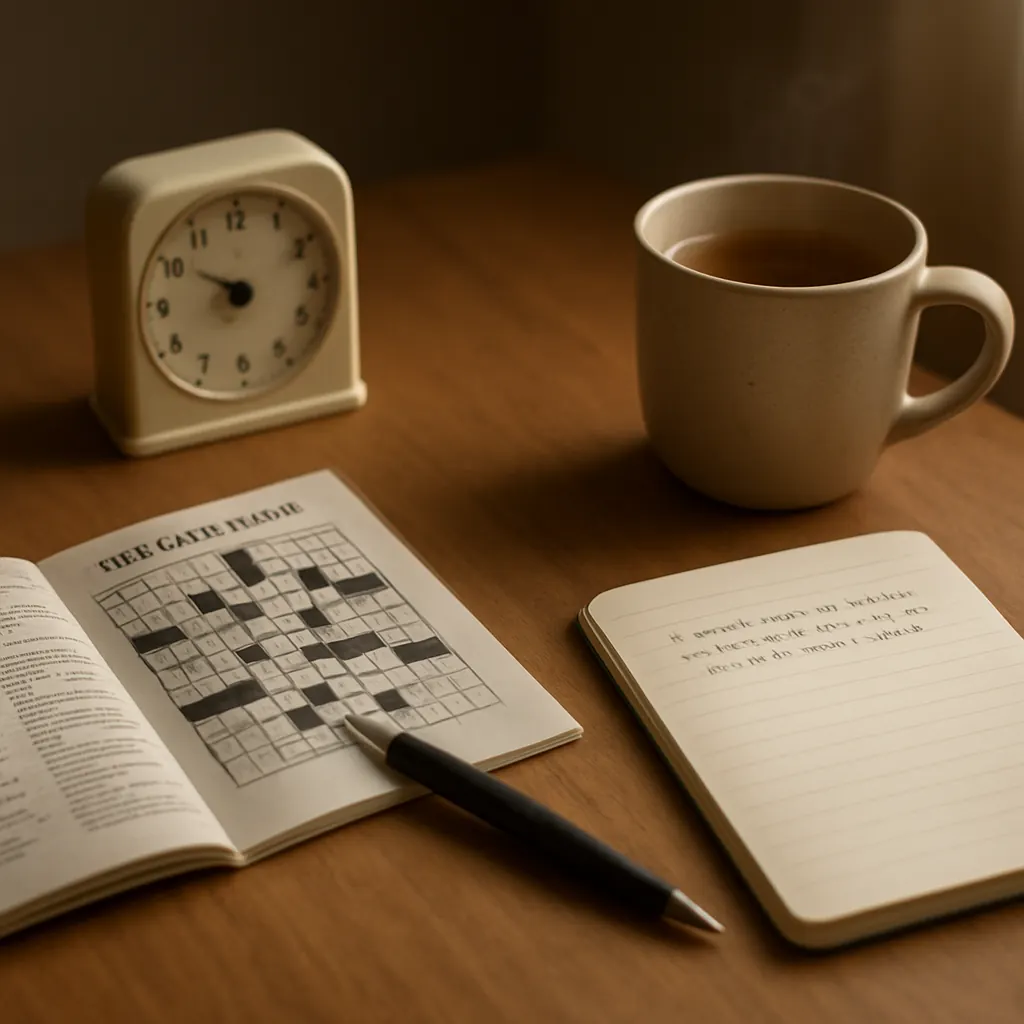
Short, structured puzzle time can be a gentle way to reset during a busy day. This article lays out a dependable 10 minute puzzle routine you can use anywhere: three micro-sessions (a word-game sprint, a logic sketch, and a pattern quick-check), guidance for choosing puzzles that reliably fit the timebox, and a simple weekly schedule to keep momentum without stress.
Why a 10-minute puzzle routine works
Ten minutes is long enough to engage your attention and short enough to be friction-free. The constraint helps you focus on process over perfect solutions, and the predictable frame makes it easier to repeat daily. Treat the session as a small reset: clear focus for a fixed time, then return to your day refreshed.
Start with two-minute warm-ups
Begin each micro-session with a focused two-minute warm-up to shift your attention and loosen thinking. Try a single quick exercise—finger tracing a small pattern, a rapid anagram scramble, or a few arithmetic fact checks—to move your brain into puzzle mode. For more warm-up options, see two-minute warm-up exercises.
Three micro-routines (each ~10 minutes)
1) Word-game sprint (10 minutes)
- What you need: a short word-game app, a printed mini-crossword, or a set of five anagram prompts.
- How to run it:
- 00:00–02:00 — warm-up (simple three-letter anagrams or vowel-consonant drills).
- 02:00–08:00 — focused play on one puzzle type (e.g., attempt the mini-crossword or solve as many short anagrams as you can).
- 08:00–10:00 — review: note one strategy that helped or a word you learned.
- Why it works: Word tasks support quick wins and vocabulary stretching without heavy cognitive load. Keep the format consistent so you can measure progress over weeks.
2) Logic sketch (10 minutes)
- What you need: paper and pen (or a notes app), and one small logic puzzle (5–8 clues, e.g., a short grid puzzle or a single binary-deduction problem).
- How to run it:
- 00:00–02:00 — warm-up (a two-minute pattern recognition or rule-check task).
- 02:00–07:00 — sketch the puzzle visually: mark constraints, make a small grid, and test one hypothesis.
- 07:00–10:00 — consolidate: record one insight and either finish the puzzle quickly or label it for later revisit.
- Why it works: The sketching step externalizes possibilities so you spend less time holding options in memory. This is especially useful when you only have a short slot.
3) Pattern quick-check (10 minutes)
- What you need: tactile or visual patterns: small Sudoku variants, sequence puzzles, or a set of five visual logic tiles.
- How to run it:
- 00:00–02:00 — warm-up: scan a grid for obvious fills or symmetry cues.
- 02:00–08:00 — rapid passes: fill what you can with simple rules, avoid deep branching.
- 08:00–10:00 — stop and annotate: highlight the next two most promising moves for a future session.
- Why it works: Pattern checks train quick recognition and let you make measurable steps in a small window. Annotating next moves keeps continuity between sessions.
Choosing puzzles that fit 10 minutes
Not every puzzle suits a micro-session. Favor tasks with clear, repeatable structures and limited branching so you won’t hit a frustrating dead end. For a practical method to judge puzzles by expected time and complexity, see choosing suitable micro-puzzles. In general:
- Prefer compact puzzles with 1–3 decision points you can evaluate in a minute or two.
- Use puzzle sets (five mini-crosswords, ten anagrams) so you can decide when you’ve spent your time.
- Keep a small stash of short puzzles on your phone or printed cards to avoid search friction.
Keep it light: a quick puzzle journal
Logging a mini-session makes the habit stick without adding overhead. Record date, routine type, one short note (what you tried), and a single observation about enjoyment or a technique to repeat. For a ready-made template, see quick puzzle journal.
Sample weekly schedule (compact and repeatable)
Rotate the three micro-routines so each gets focus while keeping variety daily. This sample assumes one 10-minute session per weekday and a slightly longer weekend practice.
- Monday — Word-game sprint (vocab and quick wins)
- Tuesday — Logic sketch (structured thinking, pen-and-paper)
- Wednesday — Pattern quick-check (visual rules)
- Thursday — Word-game sprint (try a different format)
- Friday — Logic sketch (review a puzzle left open earlier)
- Saturday — 20-minute combined session: pick two micro-routines back-to-back.
- Sunday — Rest or review journal entries and plan the coming week.
If you like a monthly structure, this approach fits neatly into a longer plan; see the four-week micro-session plan for a simple progression.
Practical tips for consistency
- Set a visible timer for exactly ten minutes to keep the session honest and finite.
- Keep your puzzle tools ready in one place (app folder, printed cards, or a small notebook).
- Treat sessions as non-competitive practice—focus on a tiny improvement or a pleasant moment rather than completion.
- If a puzzle exceeds the timebox, mark the spot and move on; you can schedule a longer follow-up later.
Micro-sessions are about steady, low-friction engagement. This 10 minute puzzle routine helps you refresh your attention, build small habits, and enjoy puzzles without commitment. Start with a two-minute warm-up, pick one focused routine each day, and use a quick journal note to close the loop. Over weeks, those small resets add up into calmer, more confident play.