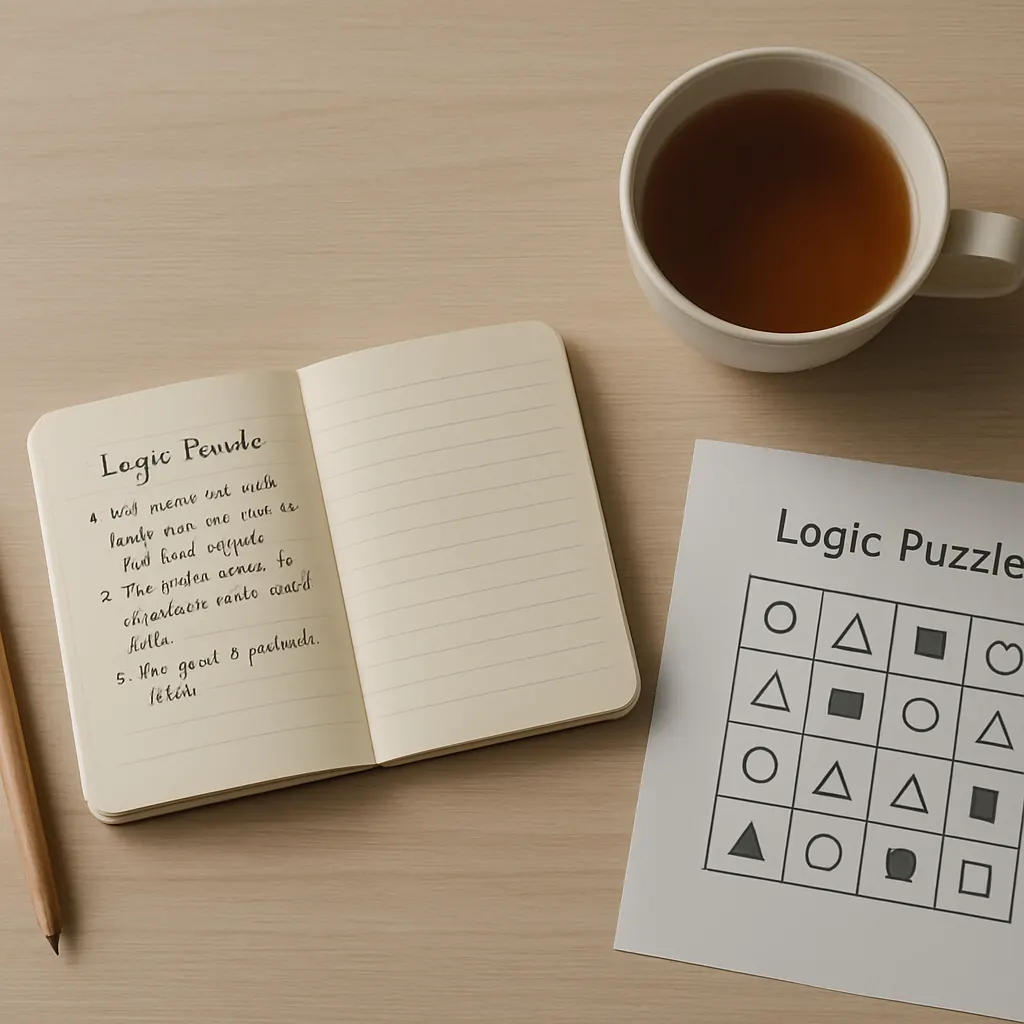
Why a month, and why gentle?
A single month is long enough to build a habit but short enough to keep focus. This plan avoids burnout by privileging consistency over intensity: you’ll use small, repeatable practice units and a clear theme for each week so progress feels tangible without pressure. The core idea is steady exposure, varied but guided practice, and short reflection to steer improvement.
How the challenge is structured
Each week has a single theme: speed, pattern spotting, notation, and mixed practice. Days are built around micro-tasks that take 10–20 minutes, with one optional stretch day for a longer puzzle. The challenge uses short daily sessions as the practice engine—simple, repeatable chunks that lower friction and make it easy to keep going.
Daily format (10–20 minutes)
- Warm-up (2–4 minutes): A quick, low-stakes puzzle to engage attention—use the weekly warm-up routines before higher-focus work.
- Core micro-task (7–12 minutes): The day’s targeted exercise (see weekly outline).
- Reflection (1–3 minutes): Note one thing that worked and one tweak for tomorrow in your log.
Week-by-week plan
Week 1 — Speed and comfortable pacing
Goal: reduce hesitation and learn a relaxed tempo. This week trains familiarity and calm execution rather than raw speed.
- Day 1–2: Timed micro-puzzles — pick a familiar puzzle type and do three in a single sitting with a gentle timer (8–12 minutes). Focus on steady breathing and consistent pace.
- Day 3–4: One deeper puzzle — allow 15–20 minutes; practice pausing, scanning, then executing each step deliberately.
- Day 5: Speed drill with reflection — three rapid rounds and note which step took longest.
- Day 6: Warm, un-timed play — enjoy a puzzle without a clock to prevent anxiety.
- Day 7: Optional longer puzzle (20–40 minutes) or rest.
Week 2 — Pattern spotting
Goal: increase recognition of recurring shapes, motifs, or logical structures that reappear across puzzles.
- Day 1–2: Focused examples — solve two puzzles emphasizing a particular pattern (e.g., symmetrical placements, recurring word roots, anchor clues).
- Day 3–4: Comparison drills — do similar puzzles back-to-back and list the repeated features in your log.
- Day 5: Pattern scavenger — try to find three small repeating elements inside a single puzzle.
- Day 6: Free exploration — play casually and underline common substructures you notice.
- Day 7: Optional review puzzle to consolidate recognition skills.
Week 3 — Notation and clearer thinking
Goal: refine how you mark puzzles so that your notes increase clarity instead of creating clutter.
- Day 1: Choose a minimal set of symbols or shorthand you’ll use for the week (e.g., small circles, crosses, letters).
- Day 2–3: Apply the system to short puzzles and then evaluate which marks helped and which confused you.
- Day 4: Try a reduction exercise — solve a puzzle using the fewest marks possible to track thought processes clearly.
- Day 5: Switch media — try digital notation if you usually use paper, or vice versa, to see what’s most comfortable.
- Day 6–7: Consolidate your notation template and use it on a longer puzzle.
Week 4 — Mixed practice and integration
Goal: combine the previous weeks’ gains into varied practice that mirrors real play.
- Day 1: Short speed rounds (3 puzzles) using your chosen notation.
- Day 2: Pattern-focused puzzles applied with deliberate marks.
- Day 3: One long puzzle using all techniques: warm-up, pattern scanning, neat notation, calm pace.
- Day 4: Peer or social play option — solve with a friend or discuss strategies aloud.
- Day 5: Self-test — timed puzzle, then immediate reflection and two specific next-step goals.
- Day 6–7: Celebrate, review your month, and plan the next set of targets.
Tracking and reflection
Record tiny, consistent data: time spent, the puzzle type, one success, and one tweak for tomorrow. If you keep a dedicated notebook, follow a simple template: date, puzzle, minutes, wins, tweaks. For a minimalist approach try the logging progress method described in that guide—its short entries are a natural fit for this challenge.
Adapting the plan
Make the plan yours by adjusting intensity, duration, or puzzle types. If 10–20 minutes feels too short, extend core micro-tasks by 5–10 minutes. If you have limited time some days, do only the warm-up and reflection—still useful. Swap weeks in order if notation matters sooner, or repeat a week when you want extra reinforcement.
Prompts for weekly reflection
- What small change made the biggest difference this week?
- Which puzzle steps still slow me down, and why?
- What notation element felt redundant or unclear?
- Which pattern do I recognize faster now than at the start?
Final tips
- Keep rituals tiny: consistent location, a short warm-up, and a one-line log dramatically increase follow-through.
- Be kind to yourself: missed days are information, not failure. Reflect briefly and resume.
- Rotate puzzle types to avoid plateauing—cross-training improves general puzzle sense.
This monthly challenge is designed to be a calm, repeatable cycle you can return to every few months. After one month you’ll have a clearer sense of what helps your play, a small archive of logged notes, and comfortable routines to keep improving without stress.