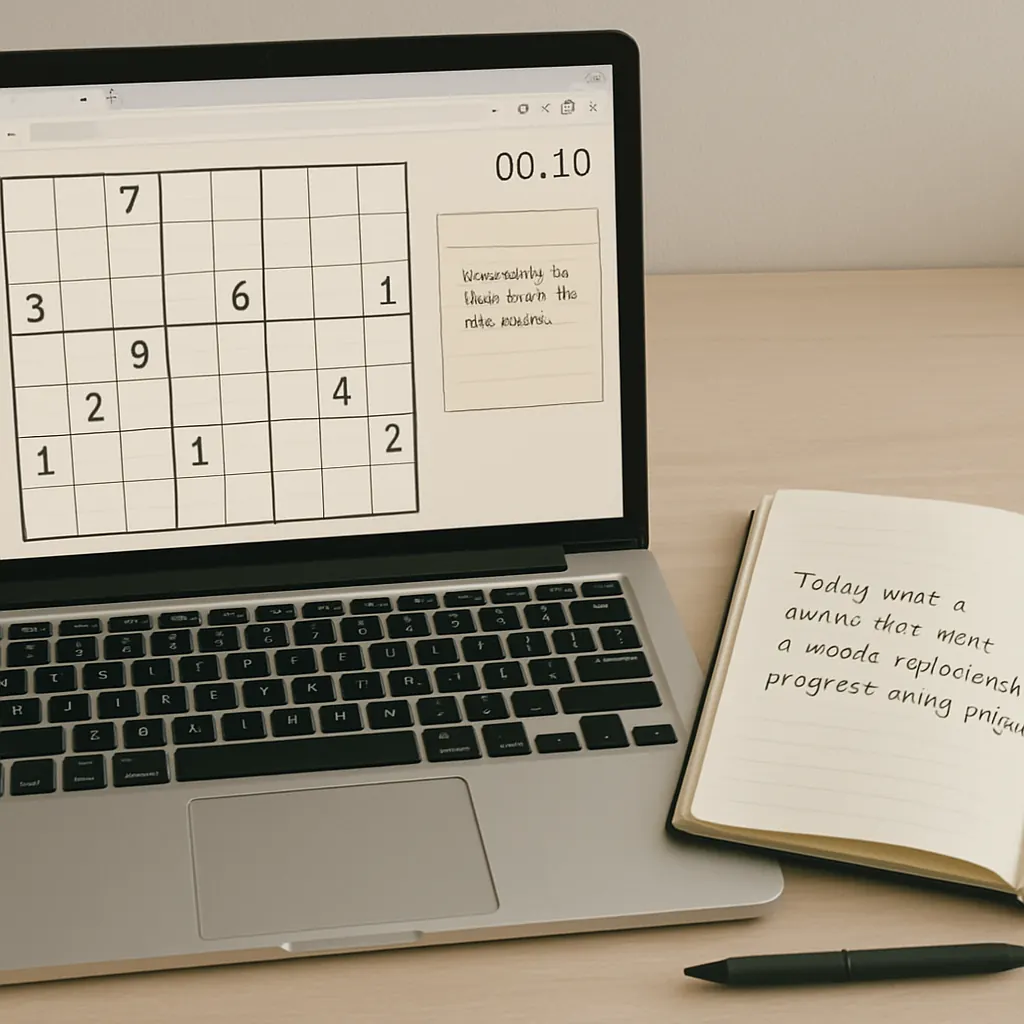
Why small tools help more than big automation
Puzzle players often want a little nudge — cleaner screenshots, a stable timer, or a neat way to capture a thought — without turning the solving process into a shortcut. The sweet spot is small, low-friction tools that reduce friction (capturing, annotating, keeping notes) while keeping the core challenge intact. Below I list extensions and tiny web apps I use for calm, steady solving with an eye on privacy, accessibility, and low distraction.
Design principles for choosing tools
- Minimal permissions: Prefer extensions that ask only for what they need. If an extension wants access to all your browsing data, consider alternatives.
- Low distraction: Disable automatic updates, notifications, or in-app feeds. Tools that sit quietly in the toolbar are ideal.
- Accessibility: Look for adjustable fonts, color contrast options, and keyboard shortcuts so tools help everyone solve comfortably.
- Local-first data: If your notes are private, choose apps or templates that store locally or let you export easily for backups.
Essential browser extensions and what to use them for
Grid overlays and rulers
When working on logic grids or hidden-picture puzzles, a simple on-screen grid overlay speeds visual alignment and prevents counting mistakes. Search for lightweight extensions called Grid Overlay or Page Ruler Redux. Key tips:
- Pick overlays with adjustable opacity and grid spacing so the underlying puzzle remains readable.
- Use the toggle shortcut; don’t leave overlays active by default.
Screenshot and annotation
Quickly capturing a state and annotating it is often more efficient than copying text. Try a screenshot tool that supports in-browser cropping and arrow/text annotations (examples: Lightshot, Nimbus). When annotating, adopt a consistent colour scheme: one colour for hypotheses, another for confirmed facts.
Timers and focus helpers
Built-in timers, simple countdowns, or Pomodoro extensions help you practice timed solving without turning sessions into a race. Choose timers that show remaining time in the toolbar and optionally vibrate or flash when finished. For a calm practice, try 25–40 minute focus segments with a 5–10 minute review break.
Contrast, fonts and readability
Extensions like Dark Reader or font-size controllers make puzzles easier to read in low-light or high-contrast situations. Use them sparingly: the goal is clarity, not changing puzzle aesthetics. Increase line-height or enable dyslexia-friendly fonts when you notice visual fatigue.
Clipboard and quick snippets
Small utilities that keep a history of your clipboard or let you save short snippets of text are useful for jotting repeated candidate names, coordinates, or common notations. Look for clipboard manager extensions that encrypt local data if you paste sensitive content.
Lightweight web apps and templates
Web apps can complement extensions: simple timers, whiteboards, and note pads that avoid social features. For journaling after a session I use a two-part structure: a fast summary and a short action note. If you want ready-made options, try the downloadable journal templates that emphasize five lines: date, puzzle type, time spent, one thing learned, one exercise for next time.
For notation and small grids, a handful of tiny HTML tools let you draw or export compact grids. These are helpful when you rely on specific shorthand — if you use the notation patterns I describe elsewhere, consider tools that implement or support those approaches: notation helpers and templates.
Tools for cooperative and multiplayer sessions
Cooperative solving benefits from shared canvases and low-latency screen sharing. Simple shared whiteboards (Google Jamboard, Miro, or open web whiteboards) let people sketch the same grid and add sticky notes. For privacy-focused meetups, services like Jitsi provide browser-based screen sharing without installing a large app. If you meet with friends, check out extensions that aid cooperative play to streamline passing notes, syncing timers, and marking progress.
Quick workflows: three calm setups
-
Solo practice (30–40 minutes)
- Open puzzle in browser, enable grid overlay only when you need it.
- Start a 35-minute focus timer in the toolbar.
- Use screenshot + annotation to capture the puzzle state before attempting difficult steps.
- Write a one-paragraph entry into your journal template during the 5-minute break.
-
Short review session (10–15 minutes)
- Open your last journal entry and copy the single exercise you planned.
- Set a 12-minute timer and work on that focused exercise; annotate when you discover an insight.
-
Co-op puzzle night (60–90 minutes)
- Start a shared whiteboard and a single shared timer so everyone follows the same rhythm.
- Assign one person to capture annotated screenshots and another to transcribe final notes into the journal template.
Privacy and maintenance checklist
- Review extension permissions before installing and revisit them quarterly.
- Prefer extensions with a clear privacy policy or open-source code if you care about transparency.
- Regularly export your journal and snippets so you control your data.
- Turn off non-essential notifications and automatic updates during solving sessions to reduce distraction.
Final note: tools to support practice, not replace it
The right extensions and tiny apps keep the solving flow smooth: a clean screenshot, a quiet timer, a readable font, and a minimal journal entry. Use tools to lower friction, then step back to let the puzzle itself do the work. If you keep a compact routine — a focused session, an annotation habit, and a short journal note — you’ll find steady progress without losing the quiet pleasure of solving.